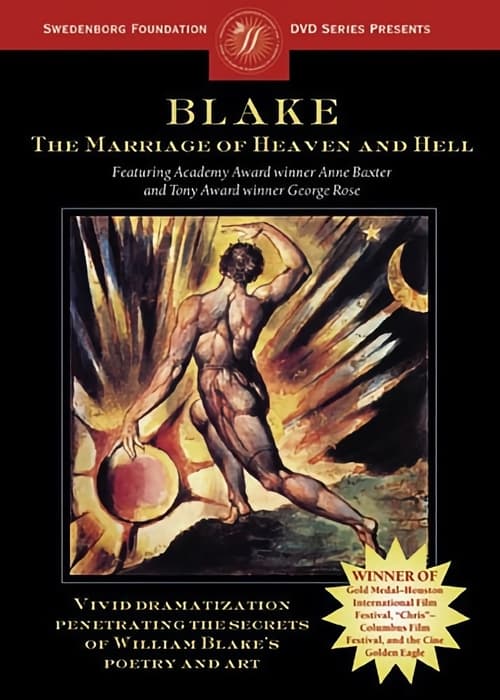
Blake: The Marriage Of Heaven And Hell
On screen, William Blake emerges as a poet and artist wrestling with how to carry heaven into ordinary sight. The film follows his quest to translate an eternal reality that lies beneath appearances into images and verse that can be felt, not merely read. It treats nature as a living mirror where... Read more
Where to Watch "Blake: The Marriage Of Heaven And Hell"
Not Currently Streaming
This title isn't available for streaming in the US right now.
Not Currently Available On (8 platforms)


Streaming availability last verified: January 20, 2026
About Blake: The Marriage Of Heaven And Hell
On screen, William Blake emerges as a poet and artist wrestling with how to carry heaven into ordinary sight. The film follows his quest to translate an eternal reality that lies beneath appearances into images and verse that can be felt, not merely read. It treats nature as a living mirror where truth is embedded in color, texture, and light, and it refuses to be a conventional biopic, instead evolving as a meditation on imagination in conflict with doubt. Through restrained pacing and striking visuals, the movie invites viewers into Blake’s process, offering a serene portrait of a mind pursuing a higher order without leaning on spoilers. Its pace is patient and its imagery luminous.
Directed by Evamarii Johnson and released in 1983, this drama comes from Harvey Bellin, Tom Kieffer, and Joseph Viscomi. It favors intimate, artist focused portrayal over spectacle, using closeup textures and muted tones to echo Blake's tactile sense of meaning.
Among its recognitions, the film won the Columbus Film Festival Chris Award and the Cine Golden Eagle, underscoring its craft in presenting Blake's vision with a quiet, formal discipline. Critics noted its steadfast, lyrical approach. It sparked future discussions about Blake in experimental cinema. Scholars praised its patience and rigor.
While not a mainstream phenomenon, the film has found a small but loyal audience among art house viewers and Blake scholars who value its contemplative pace and visual poetry. It offers a distinctive lens on how Blake might have glimpsed eternity through nature, a topic discussed in film studies circles.
Critically the film is seen as a meditation on imagination and the struggle to render metaphysical truths in tangible form. It foregrounds Blake's dialogue with nature, art, and prophecy, inviting viewers to weigh doubt against belief in an order. The tone remains contemplative, guiding audiences to reflect on art's power.
Details
- Release Date
- January 01, 1983
- Runtime
- 48m
- Type
- Movie
- Genres
- Drama
- Country
- United States
- Studio
- The Swedenborg Foundation
Cast

Anne Baxter

George Rose
Director: Evamarii Johnson
Written by: Harvey Bellin, Tom Kieffer, Joseph Viscomi