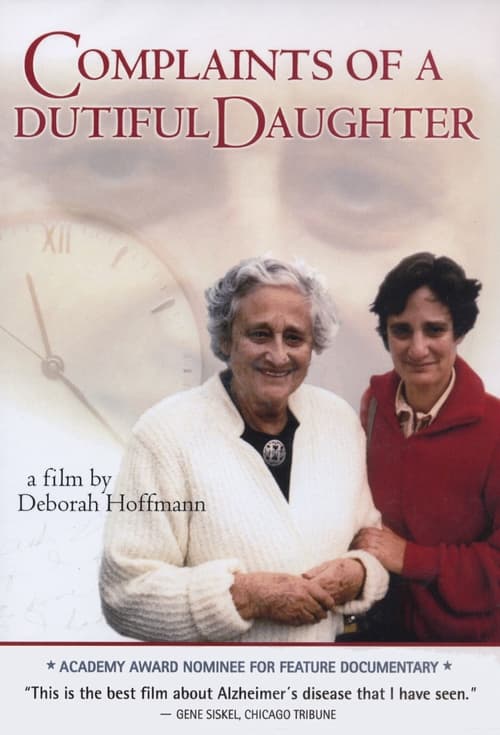
Complaints of a Dutiful Daughter
"What's a daughter to do when her mother asks: "How exactly are we related?""
Deborah Hoffmann turns a private, painful chapter into a frank, humane record in this documentary. As her mother’s Alzheimer’s progresses, Hoffmann records everyday moments, from small disagreements to unexpected flashes of the past, and she speaks directly to the camera about guilt, duty, and... Read more
Where to Watch "Complaints of a Dutiful Daughter"
Not Currently Streaming
This title isn't available for streaming in the US right now.
Not Currently Available On (8 platforms)


Streaming availability last verified: January 19, 2026
About Complaints of a Dutiful Daughter
Deborah Hoffmann turns a private, painful chapter into a frank, humane record in this documentary. As her mother’s Alzheimer’s progresses, Hoffmann records everyday moments, from small disagreements to unexpected flashes of the past, and she speaks directly to the camera about guilt, duty, and affection. The film balances wry observations with tender scenes, showing how roles shift as memory falters and practical care takes over. Hoffmann keeps the focus on relationship dynamics, not medical detail, so the story feels intimate and familiar rather than clinical, and it stays careful to avoid revealing any surprising plot turns.
Released in 1994, the film was directed by Deborah Hoffmann and drawn from her own life, presented as an autobiographical documentary that mixes home movies with thoughtful reflection.
The film earned an Academy Award nomination, bringing attention to Hoffmann’s personal approach and to documentaries that turn the lens inward. That recognition helped the film reach audiences beyond festival circuits.
Critics responded to the movie’s honesty and occasional dark humor, though some reviewers thought the pacing varied. Overall reception emphasized its emotional honesty and the ethical questions it raises about caregiving, memory, and the shifting balance between parent and child.
Over the years the film has been cited in discussions about Alzheimer’s and family care, screened in community settings, and used as a conversation starter in support groups and educational programs. Its intimate footage and clear-eyed tone made it useful for audiences trying to understand how illness changes everyday life and relationships.
Details
- Release Date
- December 01, 1994
- Runtime
- 44m
- User Ratings
- 3 votes
- Type
- Movie
- Genres
- Documentary
- Country
- United States
- External Links
- View on IMDB