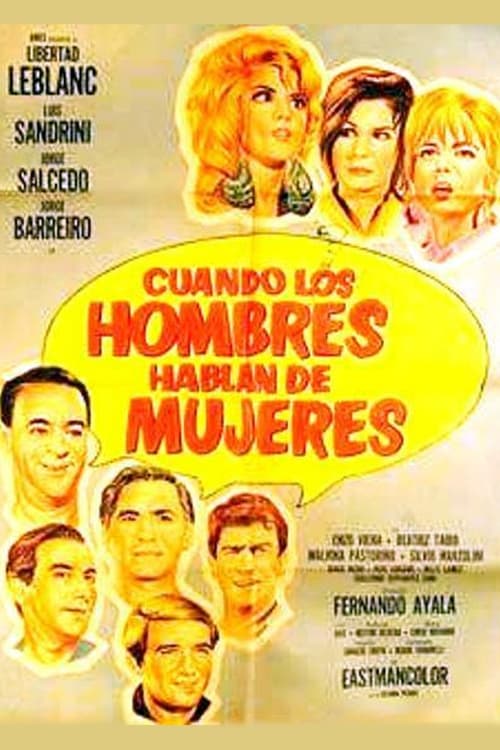
Cuando los hombres hablan de mujeres
Three tales unfold inside a Turkish bathhouse where conversations about women reveal different facets of male vanity. In the first, two loud braggarts try to woo a glamorous starlet, only to be outshined by her quick wit. The second thread follows Boca Juniors fans whose heated banter spills into... Read more
Where to Watch "Cuando los hombres hablan de mujeres"
Not Currently Streaming
This title isn't available for streaming in the US right now.
Not Currently Available On (8 platforms)


Streaming availability last verified: January 14, 2026
About Cuando los hombres hablan de mujeres
Three tales unfold inside a Turkish bathhouse where conversations about women reveal different facets of male vanity. In the first, two loud braggarts try to woo a glamorous starlet, only to be outshined by her quick wit. The second thread follows Boca Juniors fans whose heated banter spills into a flirtation between River Plate admirers, turning football rivalry into comic romance. A final strand centers on a man with eight daughters who pursues a young man despite his wife's protests, offering a cheeky take on family life and longing. The bathhouse setting keeps things intimate while the humor stays light and playful. Audiences are invited to catch small clues about relationships and social norms as the humor unfolds.
Directed by Fernando Ayala, this 1967 Argentine comedy uses a bathhouse as a lively frame for its sketches. It gathers a notable ensemble that includes Luis Sandrini and Libertad Leblanc, delivering a breezy satire of gender and desire.
Critical reception upon release framed it as light entertainment with sharper undercurrents about masculine bravado and the social rituals that bind men to football, family, and flirtation. The film uses humor to spotlight how conversations about women can reveal insecurity, longing, and the shifting power dynamics inside households and clubs. Its snapshots feel brisk, affectionate, and surprisingly humane. The writing balances comic punch with tenderness, letting characters reveal their contradictions without cruelty.
Cultural impact is modest but telling. The film captures a moment when Argentine cinema used intimate spaces to examine gender relations and sports allegiances with humor. Its light approach to romance and rivalry mirrors broader changes in 1960s society, making it a curious artifact rather than a prestige milestone. It reminds modern viewers how humor served as a safe space to question gender roles in a changing society.
There are no publicly available box office figures; however, archival materials suggest it played in Buenos Aires and selected venues in other Latin American countries during the late 1960s and early 1970s, typical for comedies of the era.
Details
- Release Date
- June 29, 1967
- Runtime
- 1h 25m
- Type
- Movie
- Genres
- Comedy
- Country
- Argentina
- Studio
- Aries Cinematográfica Argentina
- External Links
- View on IMDB
Cast

Luis Sandrini

Jorge Salcedo

Libertad Leblanc

Jorge Barreiro

Enzo Viena

Beatriz Taibo

Malvina Pastorino

Diana Ingro

Pepe Soriano

Nelly Láinez
Director: Fernando Ayala