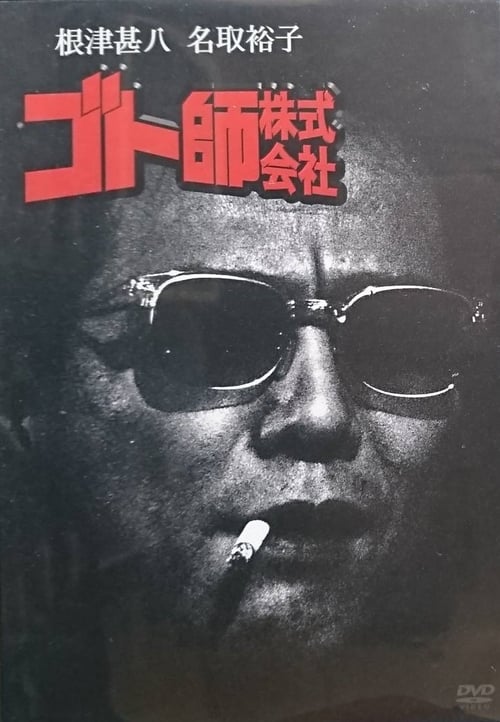
Goto shi kabushiki gaisha
Goto shi kabushiki gaisha is a 1993 crime drama directed by Norio Tsuruta that translates a manga style into a cinematic frame. The story centers on a tight network within a powerful corporation that tumbles into a spiral of money, influence and violence. As plans unfold, loyalties waver and... Read more
Where to Watch "Goto shi kabushiki gaisha"
Not Currently Streaming
This title isn't available for streaming in the US right now.
Not Currently Available On (8 platforms)


Streaming availability last verified: January 14, 2026
About Goto shi kabushiki gaisha
Goto shi kabushiki gaisha is a 1993 crime drama directed by Norio Tsuruta that translates a manga style into a cinematic frame. The story centers on a tight network within a powerful corporation that tumbles into a spiral of money, influence and violence. As plans unfold, loyalties waver and small betrayals threaten larger schemes. The film builds tension through careful procedural detail, crisp dialogue, and a moody noir mood that fits the corporate crime world. The adaptation respects the manga source while giving the material a lean, cinematic bounce, letting the characters' ambitions collide with the costs of crime. Twists avoid predictability, keeping the focus on character stakes rather than gadgetry.
Released in 1993, the film was directed by Norio Tsuruta and adapts the manga by Yoshikazu Okada and Yoichi Maekawa, which originally ran in Manga Pachinkā. The production signals a serious take on corporate crime drawn from graphic sources.
Box office data for this title is not readily available in public records, suggesting a limited or niche release rather than a wide mainstream run.
Cultural impact for this title is modest. It remains primarily of interest to fans of manga adaptations and late 90s Japanese crime cinema. There are few if any widely cited quotable moments or iconic scenes that entered broader pop culture. As a niche work tied to a specific comic lineage, its influence tends to surface in discussions of adaptation approach and the way graphic material translates to a dramatic, celluloid crime narrative.
Reception and themes are hard to pin down given the film's relative obscurity, but the work seems to align with standard crime cinema of its era. What stands out is its brisk pacing and a willingness to foreground corporate maneuvering as a form of suspense, rather than pure action. Themes likely touch on ambition, loyalty, and the costs of stepping into power, with the manga roots shaping mood and texture. Overall, the movie offers a compact, no frills look at crime within a corporate setting.
Cast

Jinpachi Nezu

Yūko Natori

Hiroshi Fujioka
Director: Norio Tsuruta
Written by: Yoshikazu Okada, Yoichi Maekawa