How I Became a Negro
Set in the tense lead up to World War II, a dedicated teacher challenges his students to see past prejudice and treat others with respect. He launches a series of provocative lessons designed to spark empathy, even as friends and authorities push back. The classroom becomes a micro drama where... Read more
Where to Watch "How I Became a Negro"
Not Currently Streaming
This title isn't available for streaming in the US right now.
Not Currently Available On (8 platforms)


Streaming availability last verified: January 14, 2026
About How I Became a Negro
Set in the tense lead up to World War II, a dedicated teacher challenges his students to see past prejudice and treat others with respect. He launches a series of provocative lessons designed to spark empathy, even as friends and authorities push back. The classroom becomes a micro drama where expectations clash with fear, and the line between tolerant talk and social pressure grows hard to draw. Through sharp dialogue and quiet moments, the story follows how ideas about inclusion ripple through routines, revealing the costs of intolerance without relying on sensational twists. The film avoids easy judgments, instead weighing personal courage against collective prejudice as the era darkens audiences are invited to question norms.
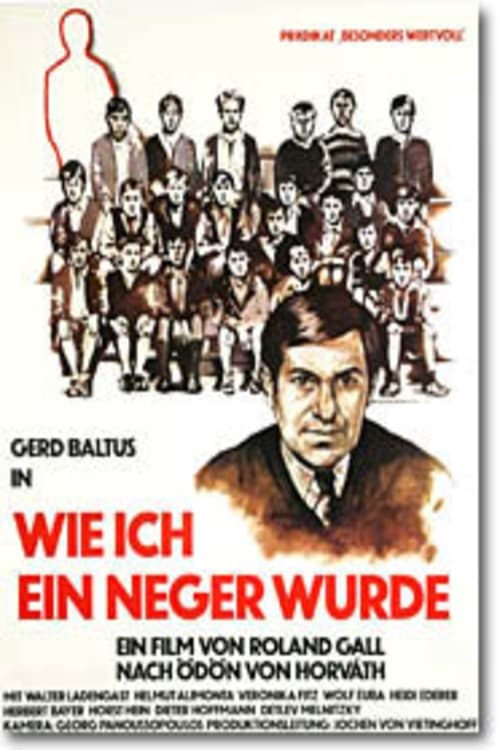
Directed by Roland Gall and released in 1971, this German drama appears to be based on an original screenplay. Gerd Baltus plays the teacher, Helmut Alimonta the Feldwebel, with Veronika Fitz and Annemarie Wendl in supporting roles throughout the film.
Box office data for How I Became a Negro is not widely documented. As a relatively obscure 1971 release, it did not appear in major international box office tallies, and there are no readily available figures for worldwide gross or distribution scale at present anywhere.
There is no record of major awards for this title. Given its limited release and niche subject, How I Became a Negro did not receive notable Oscar, Emmy or Golden Globe nominations. Some regional festivals might have shown it, but no recognized honors are attached to it rather than achieving broad distribution or national acclaim.
Critical reception is hard to gauge given the film's limited footprint, but the drama centers on moral questions rather than action. It treats tolerance as a fragile ideal tested by social pressure and authority on the eve of war, inviting discussions about prejudice, responsibility, and the educator's role. Baltus and Alimonta deliver restrained performances that heighten the drama's moral stakes within a 1930s atmosphere tense.
Details
- Release Date
- March 02, 1971
- Runtime
- 1h 44m
- Type
- Movie
- Genres
- Drama
- Country
- Germany
- External Links
- View on IMDB
Cast

Gerd Baltus
Lehrer
Helmut Alimonta
Feldwebel

Veronika Fitz
Nelly
Annemarie Wendl
Mutter von Zaebitsch

Walter Ladengast
Cäsar

Martin Lüttge

Wilfried Klaus
Director: Roland Gall