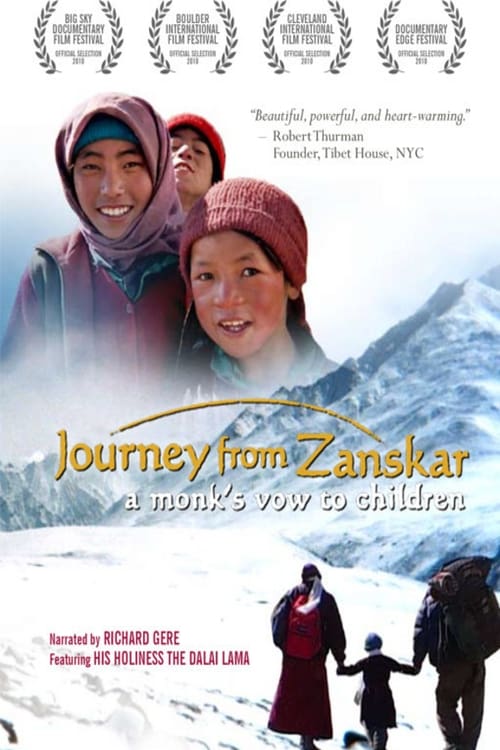
Journey from Zanskar
"How far would you go to save your dying culture?"
Journey from Zanskar records life in a remote Himalayan valley as outside forces press closer on a long-standing Tibetan Buddhist culture. The film spends time with villagers, monks, and elders, observing everyday rituals, language use, and community gatherings while development, tourism and... Read more
Stream NowWhere to Watch "Journey from Zanskar"


Not Currently Available On (7 platforms)


Streaming availability last verified: January 14, 2026
About Journey from Zanskar
Journey from Zanskar records life in a remote Himalayan valley as outside forces press closer on a long-standing Tibetan Buddhist culture. The film spends time with villagers, monks, and elders, observing everyday rituals, language use, and community gatherings while development, tourism and broader economic shifts approach. It captures practical choices people make about education, work and religious training without settling on easy answers, and it shows how political and market pressures alter patterns of daily life. The camera stays close to subjects, emphasizing scenes of communal practice and personal interaction while avoiding speculative final conclusions.
Directed by Frederick Marx and released in 2010, the documentary was filmed on location in Zanskar and nearby Himalayan regions. It presents observational footage rather than dramatic reconstruction, aiming for an ethnographic portrait and cultural reflection rather than a conventional narrative.
Journey from Zanskar had a limited theatrical run and was primarily seen through festival screenings and specialty venues. It didn't generate mainstream box office attention, finding its audience in small, community and academic settings interested in cultural preservation, education.
The film contributed to conversations about cultural loss and the effects of globalization on isolated communities, among scholars, activists and NGOs focused on Tibetan culture. Clips and discussions from the film have been used in educational contexts to show how economic change reshapes language, ritual and social structure and livelihoods.
Critical coverage was sparse, but viewers who engaged with the film noted its quiet, observational approach and ethical sensitivity to subjects. Major themes include fragility of oral traditions, tensions between development and heritage, and ways material change influences belief and identity. The film invites quiet reflection instead of prescribing solutions.
Details
- Release Date
- February 10, 2010
- Runtime
- 1h 30m
- Type
- Movie
- Genres
- Documentary
- Country
- United States
- External Links
- View on IMDB