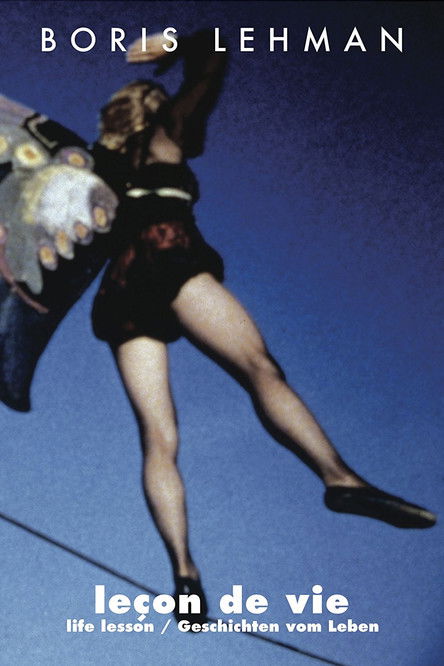
Life Lesson
Boris Lehman assembles a mosaic of voices, faces, and sounds to reflect on what was lost when innocence gave way to knowledge. Instead of a linear narrative, the film moves through short scenes featuring roughly fifty people who shout, sing, whisper, or remain silent, each offering a private... Read more
Where to Watch "Life Lesson"
Not Currently Streaming
This title isn't available for streaming in the US right now.
Not Currently Available On (8 platforms)


Streaming availability last verified: January 19, 2026
About Life Lesson
Boris Lehman assembles a mosaic of voices, faces, and sounds to reflect on what was lost when innocence gave way to knowledge. Instead of a linear narrative, the film moves through short scenes featuring roughly fifty people who shout, sing, whisper, or remain silent, each offering a private transmission. Lehman listens for stray messages and muted noises, asking viewers to look past everyday social surfaces and attune to a wider human chorus. The film keeps its revelations open-ended, preferring suggestive images and layered sound to explanation, so the viewer pieces together meaning from rhythm and repetition rather than plot.
Released in 1995, Life Lesson was written and directed by Boris Lehman. It follows Lehman’s long interest in personal, essayistic documentaries, presenting a poetic, philosophical approach rather than conventional reportage.
No record of major awards is documented for this title, and it did not earn mainstream festival prizes that would have raised its profile beyond experimental film circles. That said, it continues to be of interest to collectors and scholars of noncommercial cinema.
The film’s aesthetic has resonated with viewers who follow avant-garde documentary, because it privileges texture over tidy argument. Lehman’s line, "To attain knowledge, man and woman had to be willing to give up their innocence," acts like a guiding motif, and the repeated images and sounds tend to linger after the screening. It hasn’t produced a pop culture catchphrase, but it has been referenced in conversations about sound design and intimate camera work in art-house contexts.
Critical and audience response has been modest but appreciative, reflected in a small number of ratings that skew positive, 7.0 out of 10 from three votes. Commentators tend to highlight the film’s concern with paradise lost, solitude, communication with the invisible, and the polyphony of everyday life. If you like documentaries that favor mood, meditation, and human detail over exposition, this will feel familiar and rewarding.
Details
- Release Date
- April 11, 1995
- Runtime
- 1h 47m
- User Ratings
- 3 votes
- Type
- Movie
- Genres
- Documentary
- Country
- Belgium
- Studio
- Wallonie Image Production +2 more
- External Links
- View on IMDB
Cast
Loup Abramovici
Blanche Irène Albera
Laure Hélène Albera
Tara Beckers
André Blavier
Antoine Bonfanti
Lola Bonfanti
Isabelle Brisset
Michel-Jean Bélanger
Jacques Calonne
Director: Boris Lehman