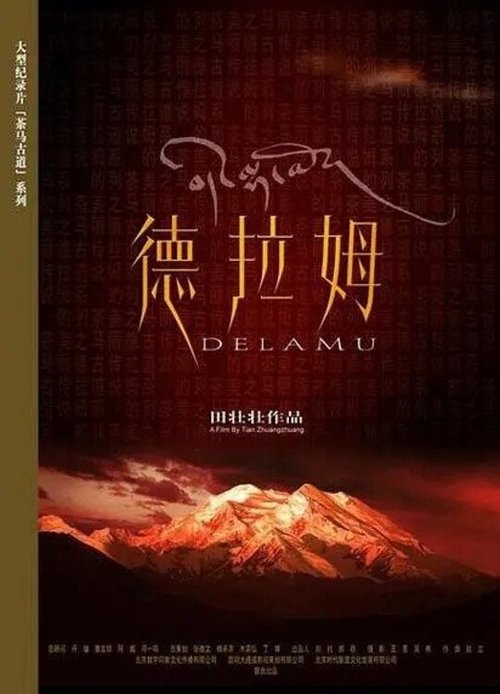
Tea-Horse Road Series: Delamu
Delamu traces the Tea-Horse Road across the Nujiang River Valley, letting its inhabitants tell their own stories rather than having events narrated from above. The film gathers intimate vignettes from a spectrum of residents: a family of fifteen speaking six languages, a pastor jailed for his... Read more
Where to Watch "Tea-Horse Road Series: Delamu"
Not Currently Streaming
This title isn't available for streaming in the US right now.
Not Currently Available On (8 platforms)


Streaming availability last verified: January 14, 2026
About Tea-Horse Road Series: Delamu
Delamu traces the Tea-Horse Road across the Nujiang River Valley, letting its inhabitants tell their own stories rather than having events narrated from above. The film gathers intimate vignettes from a spectrum of residents: a family of fifteen speaking six languages, a pastor jailed for his faith, and a 104 year old woman who has witnessed three centuries in daily ritual. Other subjects include a village chief whose wife has run away, a caravan leader who shares one wife with his elder brother, a young lama who feels loneliness in a Buddhist temple, and an eighty-two year old caravan leader whose life has become legend. Through these portraits the film sketches a map of culture, memory, and endurance along trading routes.
Directed by Tian Zhuangzhuang, Delamu is a feature of the Tea-Horse Road Series. The film presents people and places rather than a scripted narrative, drawing on long term field work and interviews to shape an observational portrait rather than adaptation.
Box office data for Delamu is not widely published. As a documentary that circulated mainly in film festivals and select art house theaters, its commercial footprint is limited and not reflected in large scale worldwide grosses and not readily quantified.
Delamu offers a vivid cultural mosaic that captures a multilingual family, Tibetan caravan life, and Buddhist practice along a historic corridor. Its patient, non sensational approach has influenced later ethnographic documentaries, inviting viewers to listen to language, ritual, and memory as living history rather than exotic scenery in global cinema.
Critics praise the films restrained, observational style, with emphasis on ordinary people over grand narration. The film probes themes of language diversity, social change, faith, and the ties that bind communities along a remote trade route, highlighting resilience without romanticizing hardship. Its quiet portrait invites reflection on memory and migration.
Details
- Release Date
- April 13, 2004
- Runtime
- 1h 50m
- User Ratings
- 3 votes
- Type
- Movie
- Genres
- Documentary
- Country
- Japan
- External Links
- View on IMDB