The Owl Who Married a Goose: An Eskimo Legend
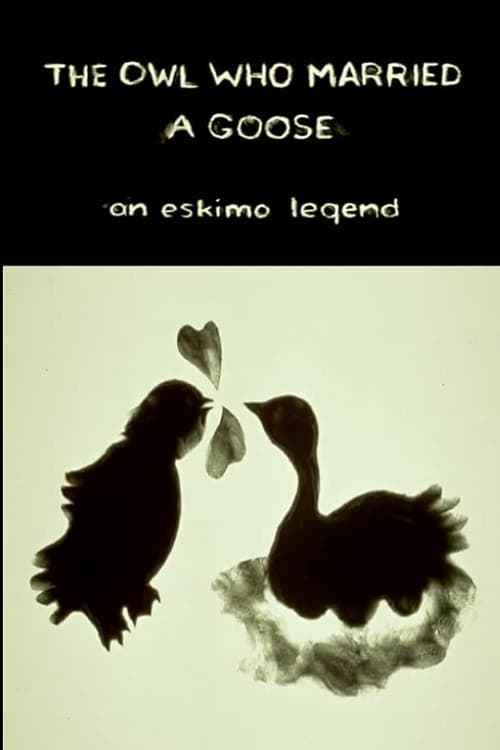
On a windswept shoreline a pair that hardly belongs together for a lifetime of habit decide to join their fates. An owl and a goose marry, and their lives briefly merge into a single family unit. The film follows their daily routines, the way they feed their young, and the small rituals that keep... Read more
Where to Watch "The Owl Who Married a Goose: An Eskimo Legend"
Not Currently Streaming
This title isn't available for streaming in the US right now.
Not Currently Available On (8 platforms)


Streaming availability last verified: January 19, 2026
About The Owl Who Married a Goose: An Eskimo Legend
On a windswept shoreline a pair that hardly belongs together for a lifetime of habit decide to join their fates. An owl and a goose marry, and their lives briefly merge into a single family unit. The film follows their daily routines, the way they feed their young, and the small rituals that keep a home afloat when two birds come from such different worlds. Their nocturnal stillness clashes with daytime bustle, and simple tasks take on an unspoken tension as the offspring grow. The visuals carry the story with stark, minimalist imagery and little spoken dialogue, inviting interpretation rather than moralizing. The film uses restrained color and bold silhouettes to underscore the emotional distance within a shared nest.
Box office data for this short is not publicly available, and there are no reported worldwide grosses or box office milestones tied to its release, which is common for experimental animation of the era. Its experimental context kept it curious.
To date, this title has not been credited with major awards or nominations in mainstream ceremonies. It remains primarily of interest to scholars of animation and fans of Caroline Leaf's experimental approach, rather than a trophy winner. That absence has made it a collectible for scholars.
Though not a household staple, the film is sometimes cited in discussions of 1970s animation experiments and Leaf's career. Its stark visuals and quiet storytelling are cited as early examples of how animation can convey emotional nuance without narration. It is often screened in courses on visual storytelling.
Reception and themes: The film is accessible for a general audience while inviting deeper reflection on coexistence and difference. Viewers often notice how simplicity and restraint can carry emotional weight, turning a brief legend into a meditation on adaptation and belonging. Its minimalism invites readings and discussion in classrooms.
Details
- Release Date
- June 03, 1974
- User Ratings
- 9 votes
- Type
- Movie
- Genres
- Animation