Tulips Shall Grow
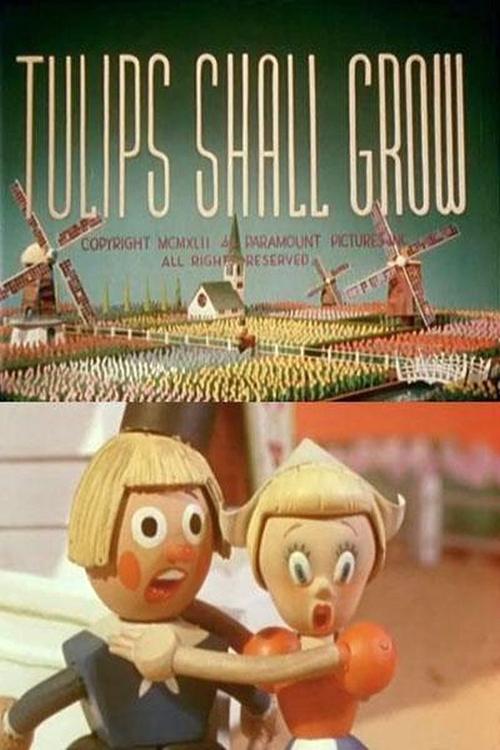
In this brief Puppetoons short, a young Dutch couple live quietly on a lush stretch of countryside until a march of cold, mechanical men and machines arrives and reduces their fields and homes to ruin. The film tracks how ordinary routines are interrupted as the invaders methodically tear through... Read more
Where to Watch "Tulips Shall Grow"
Not Currently Streaming
This title isn't available for streaming in the US right now.
Not Currently Available On (8 platforms)


Streaming availability last verified: January 14, 2026
About Tulips Shall Grow
In this brief Puppetoons short, a young Dutch couple live quietly on a lush stretch of countryside until a march of cold, mechanical men and machines arrives and reduces their fields and homes to ruin. The film tracks how ordinary routines are interrupted as the invaders methodically tear through the landscape, turning gardens and tulip beds into rubble and smoke. Told with minimal dialogue and precise stop-motion puppetry, it builds atmosphere through images and gestures, keeping attention on small domestic details and the couple's bond rather than explaining the attackers. A spare sound design and expressive musical cues underline shifts in mood without heavy exposition.
Released in 1942 and directed by George Pal, Tulips Shall Grow was created by Cecil Beard and Jack Miller as part of Pal's Puppetoons short series, employing meticulous stop-motion puppet animation notably featuring the lead vocal performance by Victor Jory.
The short earned an Academy Award nomination for Best Short Subject, Cartoons, bringing it to the attention of awards voters of the era, and marking it as one of the more recognized animated entries produced in wartime Hollywood. The nomination acknowledged its technical innovation and timely subject.
In 1997 the film was selected for preservation in the United States National Film Registry as culturally, historically, or aesthetically significant, which helped revive interest among historians and animation fans and highlighted George Pal's Puppetoons as an important strand of early American stop-motion work, and is still shown in retrospectives.
Contemporary responses are mixed but appreciative, reflected in a 6.774/10 user rating from 31 votes; viewers often note its stark anti-war undertone, the contrast between human warmth and mechanized destruction, and how the tactile puppetry amplifies the emotional impact despite the short runtime, and its short runtime sharpens the message.
Details
- Release Date
- January 26, 1942
- Runtime
- 7m
- User Ratings
- 31 votes
- Type
- Movie
- Genres
- Animation, War
- Country
- United States
- Studio
- George Pal Productions +1 more
- External Links
- View on IMDB
Cast

Victor Jory
(voice)
Director: George Pal
Written by: Cecil Beard, Jack Miller