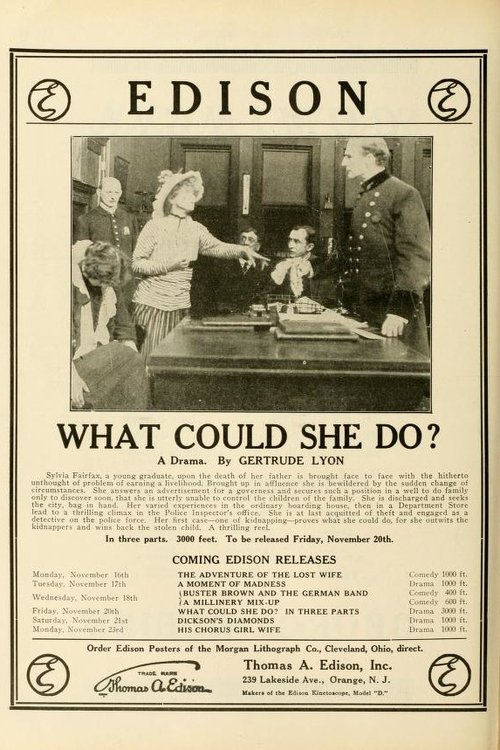
What Could She Do?
When her father dies, Sylvia Fairfax faces sudden financial and social pressures she isn't prepared to handle. After failing to secure a position as governess at the Windermere household, she leaves her provincial life and goes to New York to try to support herself. The film follows her practical... Read more
Where to Watch "What Could She Do?"
Not Currently Streaming
This title isn't available for streaming in the US right now.
Not Currently Available On (8 platforms)


Streaming availability last verified: January 13, 2026
About What Could She Do?
When her father dies, Sylvia Fairfax faces sudden financial and social pressures she isn't prepared to handle. After failing to secure a position as governess at the Windermere household, she leaves her provincial life and goes to New York to try to support herself. The film follows her practical choices and strained relationships as she copes with new responsibilities and the limits placed on her by society. Along the way she encounters moral dilemmas and social expectations that test her resolve, shown through expressive acting and carefully staged domestic scenes rather than spoken dialogue.
Released in 1914, the picture was directed by John H. Collins and stars Gertrude McCoy, who is also credited as the creator. The supporting cast includes Bigelow Cooper, Robert Brower, Richard Tucker and Harry Beaumont, and it was made as a short film.
No reliable box office records survive for this title, which is common for films from the 1910s. Distribution and ticketing were poorly documented then, so its commercial reach and earnings are unknown, and many regional exchanges didn't keep records then.
Only two of the original three reels are known to exist, a fragmentary survival that makes the film significant to archivists and silent film scholars. The existing footage gives researchers a window on early screen portrayals of women and on the work of Collins and McCoy, and it serves as evidence of early star vehicles.
Contemporary reviews are scarce, so assessments rely on the surviving material and period context. The narrative engages issues of class, financial insecurity, and the narrow vocational options available to women in the 1910s. Stylistically it reflects the melodramatic visual storytelling common in early narrative films, and scholars note its acting.
Details
- Release Date
- November 20, 1914
- Type
- Movie
Cast

Gertrude McCoy
Sylvia Fairfax
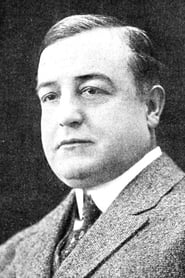
Bigelow Cooper
Col. Fairfax

Robert Brower
John Atkinson
Richard Tucker
Robert Gray
Harry Beaumont
Billy Banners
Director: John H. Collins
Written by: Gertrude McCoy