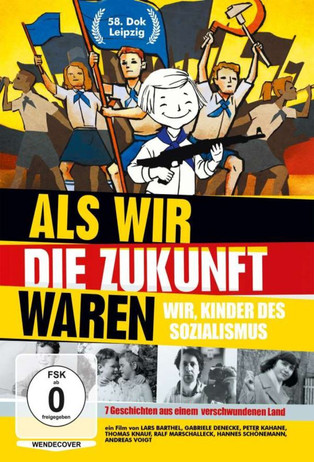
Als wir die Zukunft waren
Seven filmmakers look back to their earliest years in East Germany, recalling small moments that add up to a vivid portrait of life in the 1950s and 1960s. The film stitches together personal memories, home movies, and reflections to show kids who are curious, awkward, proud, and sometimes... Read more
Where to Watch "Als wir die Zukunft waren"
Not Currently Streaming
This title isn't available for streaming in the US right now.
Not Currently Available On (8 platforms)


Streaming availability last verified: January 14, 2026
About Als wir die Zukunft waren
Seven filmmakers look back to their earliest years in East Germany, recalling small moments that add up to a vivid portrait of life in the 1950s and 1960s. The film stitches together personal memories, home movies, and reflections to show kids who are curious, awkward, proud, and sometimes rebellious, long before labels like "cool" were in play. Family life varies from conforming households to those quietly resisting the system, and for some children a parent’s departure to the West leaves a clear absence. Depending on their upbringing, these youngsters are shaped by expectations to support a new socialist society, and the directors let those impressions speak through voice, gesture, and fragmentary scenes.
Released in 2016, the project was directed collectively by Hannes Schönemann, Thomas Knauf, Peter Kahane, Ralf Marschalleck, Andreas Voigt, Gabriele Denecke, and Lars Barthel. It’s an original documentary constructed from the directors’ memories and archival material, and it premiered in Germany with subsequent screenings at selected festivals and cultural venues.
The film had a limited theatrical run, mainly in Germany, and found a larger audience through festival showings and cultural programs. Commercial receipts were modest and not widely reported, reflecting its art-house profile rather than mainstream box office ambition.
Als wir die Zukunft waren fed into wider conversations about how the GDR is remembered, offering intimate snapshots that humanize everyday life under socialism. It sparked local discussions and educational screenings, especially around themes of family separation, youth culture, and the quiet ways people adapted to or resisted political expectations.
Critical response was mixed to positive, with viewers appreciating the honesty of first-person recollections while noting variations in style and depth across segments. The film’s main themes are memory and identity, the contrast between public ideology and private life, and how small domestic scenes reveal larger historical tensions.
Details
- Release Date
- February 25, 2016
- Runtime
- 1h 27m
- User Ratings
- 1 votes
- Type
- Movie
- Genres
- Documentary
- Country
- Germany
- Studio
- MDR
- External Links
- View on IMDB