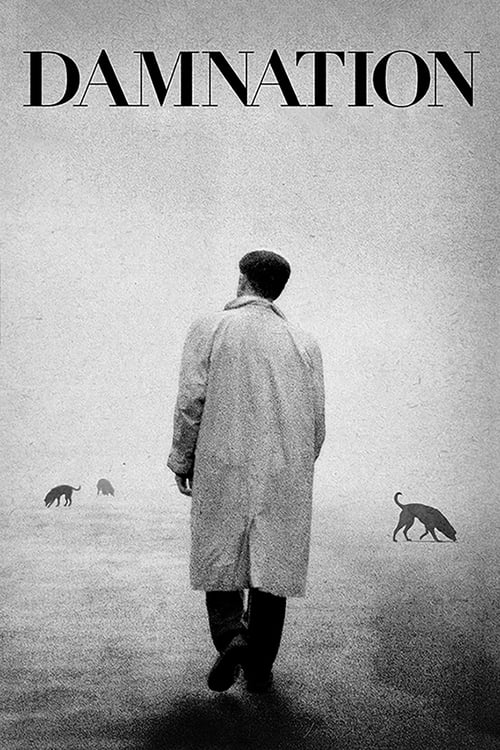
Damnation
On a damp, overcast day, Karrer drifts through a city that seems to have forgotten color. His days are marked by rain, mud, and a stubborn sense of isolation. The only flicker of meaning comes at the Titanik Bar, where a strikingly beautiful singer keeps watch over the room. He becomes consumed... Read more
Watch NowWhere to Watch "Damnation"


Not Currently Available On (8 platforms)


Streaming availability last verified: February 19, 2026
About Damnation
On a damp, overcast day, Karrer drifts through a city that seems to have forgotten color. His days are marked by rain, mud, and a stubborn sense of isolation. The only flicker of meaning comes at the Titanik Bar, where a strikingly beautiful singer keeps watch over the room. He becomes consumed by her, even though she belongs to another man. Karrer struggles to keep distance while his longing thickens the air around him. Tarr uses the bleak streets and the bar's glow to map a life that feels endlessly stalled, haunted by what might have been. The camera lingers on puddles, echoes of footsteps, and neon reflections that make the moment feel heavy and timeless.
Directed by Béla Tarr, this 1988 drama adapts László Krasznahorkai's novel with fierce restraint. The filmmaker favors long takes, minimal dialogue, and spacious frames that let actors breathe. The production emphasizes the gray palette of an industrial town, turning dialogue into a texture rather than a driver. The performances lean into restraint, with quiet pauses that speak volumes.
Box office details for Damnation were modest and mostly confined to art-house circuits; it did not release wide-scale commercial numbers. Still, the film traveled to international festivals and found appreciative audiences among cinephiles who value austere storytelling. Its festival presence helped it gain a small but devoted following on the art-house circuit.
The film is often cited in European art cinema for its austere mood and restrained dialogue. Its stark imagery and the Titanik Bar as a liminal space have influenced later filmmakers who pursue weighty themes with patient, minimal storytelling. Its influence has spread through art-house circuits and academic writing alike.
Critics tend to praise the film for its precise social observation and the way solitude quietly reshapes ordinary life. Themes of longing, power, and restraint accumulate through careful conversations and the cold weather, creating a meditation on desire and moral control. The tone invites viewers to read desire as a social force, not just a personal feeling.
Details
- Release Date
- October 20, 1988
- Runtime
- 1h 56m
- User Ratings
- 142 votes
- Type
- Movie
- Genres
- Drama, Crime
- Country
- HU
- Studio
- Mokép +2 more
- External Links
- View on IMDB
Official Trailer
Cast

Székely B. Miklós
Karrer

György Cserhalmi
Sebestyén
Vali Kerekes
The Singer

Gyula Pauer
Willarsky

Hédi Temessy
Cloakroom Attendant
Gábor Balogh
János Balogh
Péter Breznyik Berg
Imre Chmelik
János Gémes
Director: Béla Tarr
Written by: László Krasznahorkai