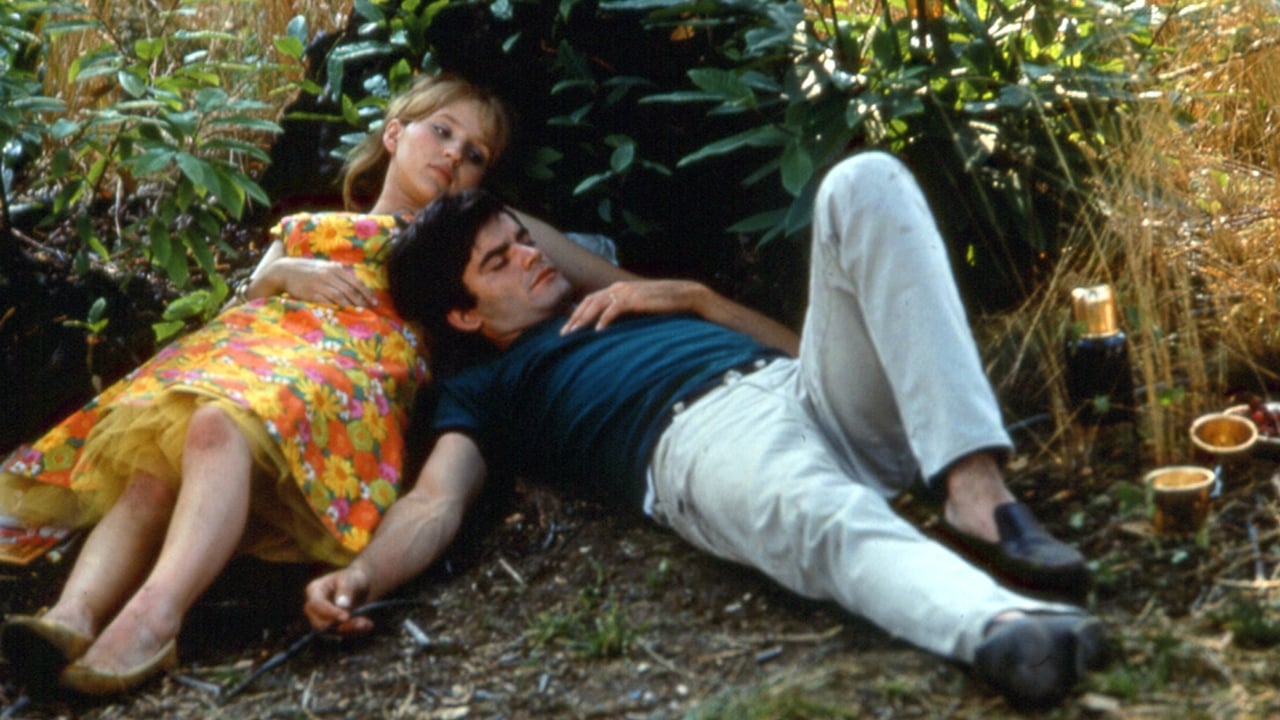

Happiness
"Only a woman could dare to make this film."
On the surface, a young husband and father named François Chevalier seems to have it all: a devoted wife, Thérèse, and a warm, orderly home. Yet a new attraction begins to tug at his attention, drawing him toward another woman and a life beyond routine. The film follows his alternating ease and... Read more
Stream NowWhere to Watch "Happiness"

Not Currently Available On (7 platforms)


Streaming availability last verified: January 21, 2026
About Happiness
On the surface, a young husband and father named François Chevalier seems to have it all: a devoted wife, Thérèse, and a warm, orderly home. Yet a new attraction begins to tug at his attention, drawing him toward another woman and a life beyond routine. The film follows his alternating ease and unease as he moves through daily life with his children and neighbors while his thoughts drift toward possibilities that could disrupt the steady arc of his days. Told with crisp dialogue, patient camera work, and a shy, lyrical humor, Happiness frames desire as a private question within a shared life, without melodrama or easy answers. The tension between duty and desire stays understated.
Directed by Agnès Varda, Happiness was released in 1965. The film exemplifies her intimate observational approach, favoring small life details over grand twists and letting the actors carry mood through quiet, naturalistic performances. Its focus remains on character rather than plot.
Happiness is often cited for its playful critique of happiness as a social construct and for showing desire within a stable marriage without shying away from ambiguity. Varda's bold compositions and bright color choices reflect the era's experimentation in cinema. Its influence stretched into discussions about women directors and modern storytelling.
Critics describe Happiness as a quiet, probing meditation on loyalty, temptation, and the costs of choosing certainty over risk. The narrative treats ordinary life as fertile ground for questions about fulfillment, freedom, and responsibility, inviting viewers to weigh affection, social norms, and personal happiness without offering easy conclusions. Its themes linger beyond romance and challenge what a modern audience expects.
Box office data for Happiness is not widely documented, reflecting its status as an art house release. In some markets it drew a modest audience of cinephiles and students of world cinema rather than mass market numbers at the time.
Details
- Release Date
- February 10, 1965
- Runtime
- 1h 20m
- User Ratings
- 283 votes
- Type
- Movie
- Genres
- Drama, Romance
- Country
- France
- Studio
- Parc Film
- External Links
- View on IMDB
Official Trailer
Cast

Jean-Claude Drouot
François Chevalier
Claire Drouot
Thérèse Chevalier
Olivier Drouot
Pierrot Chevalier
Sandrine Drouot
Gisou Chevalier
Marie-France Boyer
Émilie Savignard
Marcelle Faure-Bertin
Bertin
Manon Lanclos
Mrs. Mesquier
Sylvia Saurel
Yvette Mercier
Marc Eyraud
Joseph Chevalier
Christian Riehl
Written by: Agnès Varda