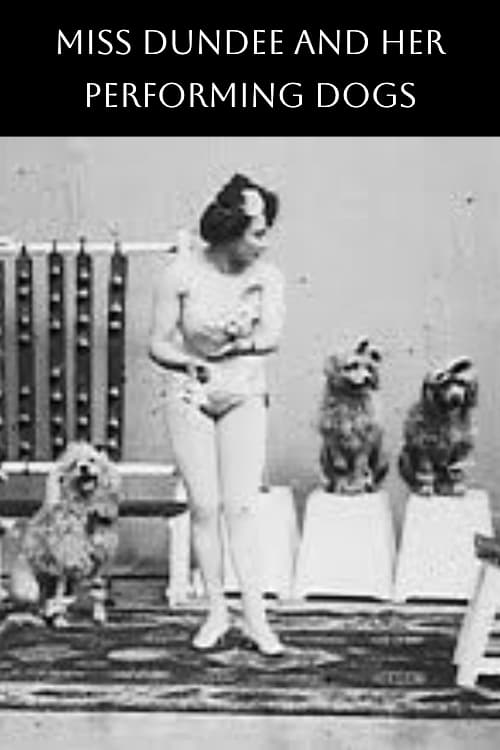
Miss Dundee and Her Performing Dogs
Miss Dundee and Her Performing Dogs presents a short, silent vignette in which a woman parades her trained canine companions for the camera. The action unfolds in a simple, stage like setting as the woman cues the dogs through a sequence of tricks. The dogs respond to her commands with obedient... Read more
Where to Watch "Miss Dundee and Her Performing Dogs"
Not Currently Streaming
This title isn't available for streaming in the US right now.
Not Currently Available On (8 platforms)


Streaming availability last verified: January 14, 2026
About Miss Dundee and Her Performing Dogs
Miss Dundee and Her Performing Dogs presents a short, silent vignette in which a woman parades her trained canine companions for the camera. The action unfolds in a simple, stage like setting as the woman cues the dogs through a sequence of tricks. The dogs respond to her commands with obedient precision, performing sit stays, paw touches, follow the leader, and a finale that shows off balance and coordination. There is a light comedy vibe as the dogs tumble into amusing mischief and the handler keeps a cheerful, knowing rhythm. The piece functions like a straightforward observational sketch rather than a narrative drama, inviting audiences to appreciate technique rather than plot. Moments when a dog misreads a cue get resolved in playful, matter of fact fashion, underscoring the film's gentle, instructional mood. The overall effect is to capture a small moment of showmanship and the human animal bond, as captured by an early filmmaker experimenting with what pictures could do. It hints at a broader tradition of animal acts.
Directed by Alice Guy-Blaché, a pioneer among women filmmakers, this 1902 short showcases her early experiment with combining documentary style and light comedy in early cinema contexts. The piece predates feature storytelling, focusing on a single, charming act with dogs.
Box office data for Miss Dundee and Her Performing Dogs from 1902 is not widely documented, as early shorts often lacked formal reporting. The film would have appeared in nickelodeon style programs or vaudeville showings of its era at venues.
In the wider arc of cinema history this film stands as a reminder of early animal performance in film and of Guy-Blaché's role in opening doors for women behind the camera. It captures the era's fascination with demonstration filming and pet tricks. Its simple presentation hints at a documentary impulse.
Critics of the period tended to value novelty and the skill on display; this film underscores themes of expertise, showmanship, and the bond between handler and animal. It offers a small window into how audiences experienced early screen entertainment. Its light tone keeps the focus on craft rather than drama.
Details
- Release Date
- March 02, 1902
- Runtime
- 5m
- User Ratings
- 21 votes
- Type
- Movie
- Genres
- Comedy, Documentary
- Country
- France
- Studio
- Gaumont
- External Links
- View on IMDB