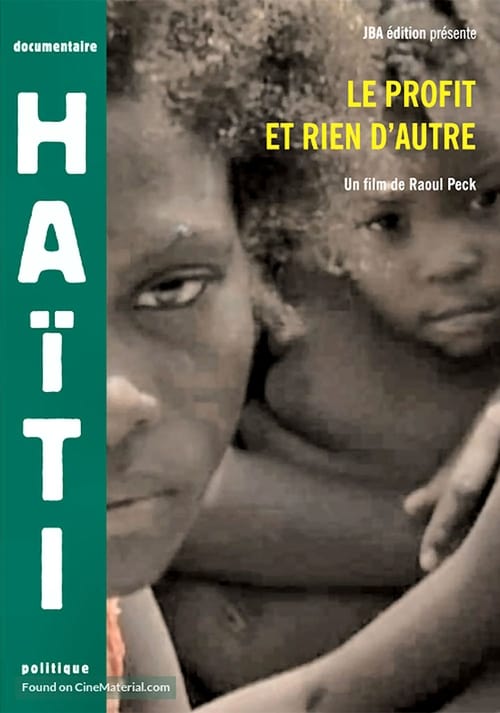
Profit & Nothing But! Or Impolite Thoughts on the Class Struggle
Raoul Peck's documentary examines how the market driven world economy touches the island of Haiti, his homeland, from the ground up. It threads together conversations with economists and thinkers such as Serge Latouche, Immanuel Wallerstein, Bernard Maris, and René Passet to illuminate how global... Read more
Where to Watch "Profit & Nothing But! Or Impolite Thoughts on the Class Struggle"
Not Currently Streaming
This title isn't available for streaming in the US right now.
Not Currently Available On (8 platforms)


Streaming availability last verified: January 23, 2026
About Profit & Nothing But! Or Impolite Thoughts on the Class Struggle
Raoul Peck's documentary examines how the market driven world economy touches the island of Haiti, his homeland, from the ground up. It threads together conversations with economists and thinkers such as Serge Latouche, Immanuel Wallerstein, Bernard Maris, and René Passet to illuminate how global trade rules, financial pressures, and privatization reshape work, housing, food, and political life. Rather than a single narrative, the film moves through interviews, archival footage, and on site observations to show the everyday consequences of liberalization for ordinary Haitians. It challenges viewers to consider who benefits from open markets and who bears the costs, without resorting to sensationalism or easy conclusions. It uses clips to contrast markets with factories, hinting at history of extraction and resilience.
Directed by Raoul Peck, Profit and Nothing But offers a Haitian perspective on globalization and its costs. Released in 2001, the film foregrounds interviews with economists and scholars to scrutinize how market forces shape work, housing, food, and political life.
Box office data for this documentary isn't widely published, reflecting its modest commercial footprint. The film circulated mainly through festival screenings and academic circles rather than a wide theatrical run, and it found audiences primarily in classrooms and special programs.
The film contributes to conversations about globalization and development by centering Haitian experience and expert critique. It uses clips to contrast markets with factories, hinting at history of extraction and resilience. Scholars reference it in discussions of development policy and reform.
Critically, the documentary presents a focused critique of neoliberal trends and debt dynamics, linking macro policy to tangible hardship in Haiti. The discussions with Latouche and Wallerstein frame globalization as a system that needs rethinking for the benefit of the many. Its tone stays measured, inviting conversation beyond the screen.
Details
- Release Date
- November 22, 2001
- Runtime
- 40m
- User Ratings
- 3 votes
- Type
- Movie
- Genres
- Documentary
- Country
- Belgium
- Studio
- ARTE France Cinéma +4 more
- External Links
- View on IMDB
Cast
Serge Latouche
Himself
Bernard Maris
Himself
Gérald Mathurin
Himself
René Passet
Himself
Immanuel Wallerstein
Himself
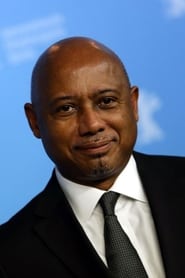
Raoul Peck
Narrator
Director: Raoul Peck