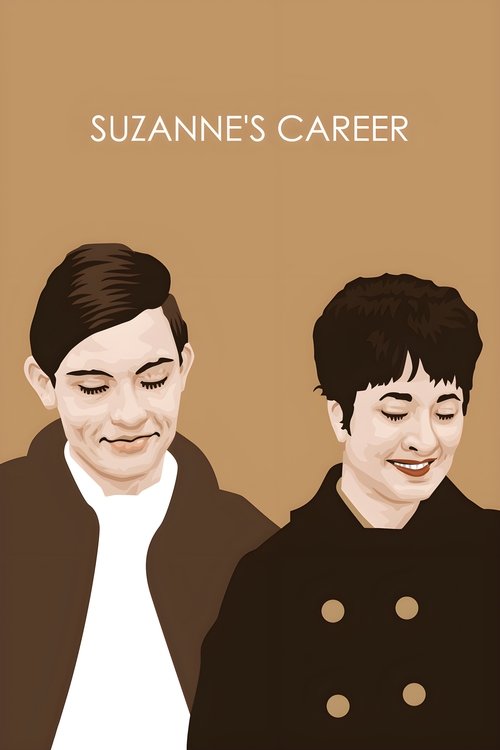
Suzanne’s Career
Two longtime friends cross paths with a woman named Suzanne, and what seems simple begins to pressure boundaries of trust. In this entry in Rohmer's Moral Tales, the story centers on how one man interprets affection, flirtation, and obligation through a filtered lens, turning everyday... Read more
Where to Watch "Suzanne’s Career"
Not Currently Streaming
This title isn't available for streaming in the US right now.
Not Currently Available On (8 platforms)


Streaming availability last verified: January 18, 2026
About Suzanne’s Career
Two longtime friends cross paths with a woman named Suzanne, and what seems simple begins to pressure boundaries of trust. In this entry in Rohmer's Moral Tales, the story centers on how one man interprets affection, flirtation, and obligation through a filtered lens, turning everyday conversations into an arena of moral testing. The plot unfolds with restrained drama, little overt action, and an inner commentary that reveals how thoughts shape reality more than events do. Rohmer asks whether Suzanne is truly vulnerable or if the narrator's longing reads her in a way that suits his desires. The result is a nuanced study of perception, restraint, and the ethics of companionship. No sensational twists are necessary when weather does the lifting.
Directed by Éric Rohmer and released in 1963, Suzanne's Career is one of his Moral Tales. It uses an original screenplay rather than adaptation, translating inner moral debates into a restrained, dialogue driven drama that emphasizes perception over plot action.
Box office data for Suzanne's Career isn't widely published, and the film is generally discussed in terms of Rohmer's artistic influence rather than commercial performance. Its standing rests on critical recognition within art house circles rather than box office numbers.
As part of the Moral Tales, the film helped define Rohmer's austere yet intimate style that values dialogue, ethical puzzles, and the psychology of desire. The approach inspired later filmmakers to foreground character observation and moral ambiguity over sensational plot turns, shaping art house cinema and conversations about romance itself.
Critics generally recognize the film for its restrained tone and sharp focus on perception and miscommunication. Themes include how friendship and attraction collide with self deception, and how a single point of view can distort truth, urging viewers to weigh intention against effect. The film rewards patient attention and lingers.
Details
- Release Date
- February 27, 1963
- Runtime
- 54m
- User Ratings
- 122 votes
- Type
- Movie
- Genres
- Drama, Romance
- Country
- France
- Studio
- Les Films du Losange
- External Links
- View on IMDB
Cast
Catherine Sée
Suzanne

Philippe Beuzen
Bertrand

Christian Charrière
Guillaume
Diane Wilkinson
Sophie

Patrick Bauchau
Frank (uncredited)

Jean-Claude Biette
Jean-Louis (uncredited)

Jean-Louis Comolli
Party Guest (uncredited)
Pierre Cottrell
Party Guest (uncredited)
Written by: Éric Rohmer