
The Battle of Chile: Part I
In 1973 Chile, a nation slides toward a violent showdown over its elected government. This documentary records the months of mounting political tension that led to the overthrow of Salvador Allende, following street protests, strikes, and confrontations between supporters and opponents. The... Read more
Watch NowWhere to Watch "The Battle of Chile: Part I"

Not Currently Available On (8 platforms)


Streaming availability last verified: January 19, 2026
About The Battle of Chile: Part I
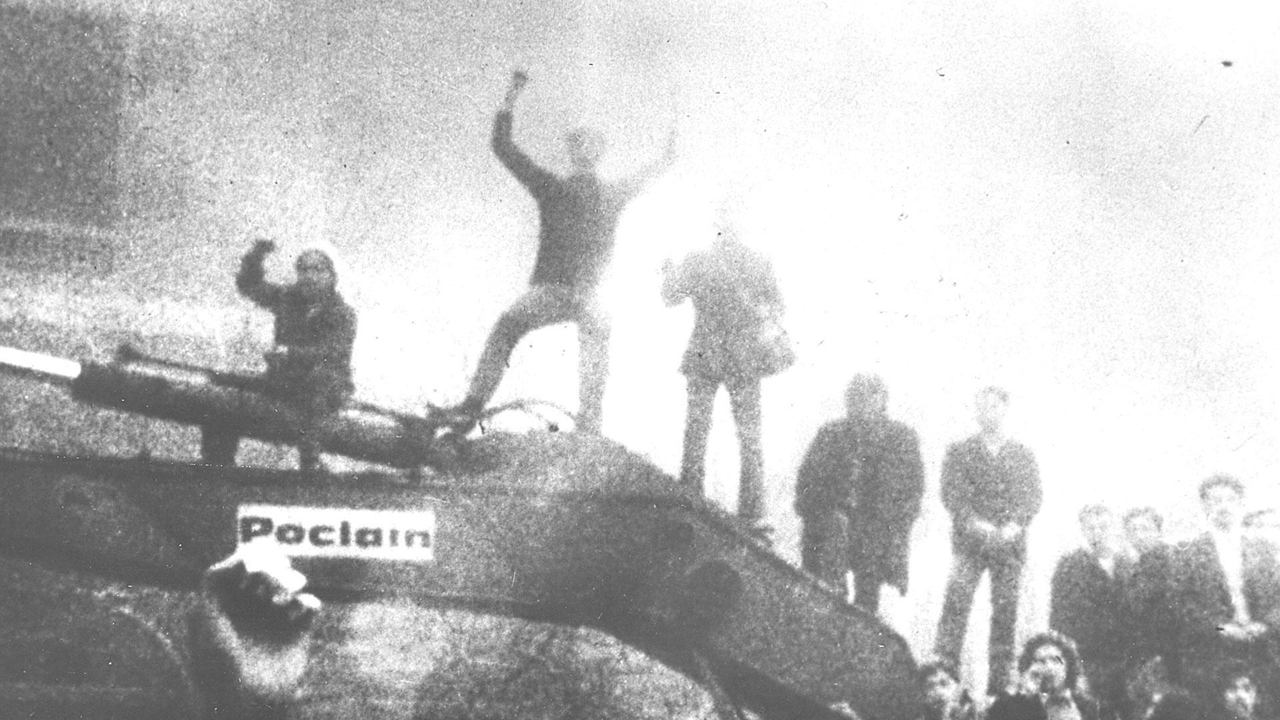
In 1973 Chile, a nation slides toward a violent showdown over its elected government. This documentary records the months of mounting political tension that led to the overthrow of Salvador Allende, following street protests, strikes, and confrontations between supporters and opponents. The camera stays close to rallies, union meetings, and everyday citizens, assembling footage that shows how public life and political debate turned increasingly fraught. Narration and archive clips of Allende are woven into the material, giving viewers a sense of how events unfolded in real time without revealing later developments beyond the film's scope.
Directed by Patricio Guzmán and released in 1975, the film was created with collaborators Pedro Chaskel, Federico Elton, and Julio García Espinosa, using extensive on-location footage shot during 1973 political events in Chile.
The movie had a limited commercial run and no widely reported box office totals, often reaching audiences through festivals, activist screenings, and educational showings rather than mainstream theatrical distribution.
Over the decades the film has come to be seen as a landmark of political documentary filmmaking, its unvarnished images of protests and state response cited in film courses and history classes. Scenes of mass demonstrations and street conflict are frequently referenced when people discuss cinematic records of political crisis, and the film has influenced subsequent documentarians interested in cinema as witness.
Critical reaction emphasizes the film's urgency and its clear political perspective, reflected in a vote average of 7.208 out of 10 from 49 votes. Reviewers have noted the strength of its reportage-style footage and the way the material captures polarization, state power, media influence, and civic response. The film asks questions about democratic institutions and the fragility of public life under extreme political pressure, making it a source of debate as well as historical documentation.
Details
- Release Date
- March 18, 1975
- User Ratings
- 49 votes
- Type
- Movie
- Genres
- Documentary, History
Official Trailer
Cast

Salvador Allende
Self (archive footage)
Abilio Fernández
Self - Narrator (voice)
Director: Patricio Guzmán
Written by: Pedro Chaskel, Federico Elton, Julio García Espinosa