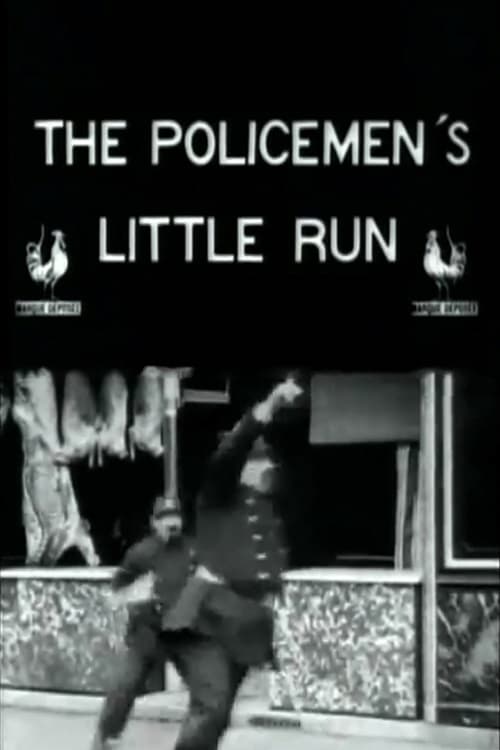
The Policemen's Little Run
On a busy street a police officer notices a dog slyly slipping a chunk of meat from a butcher shop and gives chase. Before long, other patrolmen catch the scent and join the pursuit, turning a simple theft into a chaotic street drama. What follows is a rapid sequence of stumbles, pratfalls, and... Read more
Where to Watch "The Policemen's Little Run"
Not Currently Streaming
This title isn't available for streaming in the US right now.
Not Currently Available On (8 platforms)


Streaming availability last verified: January 14, 2026
About The Policemen's Little Run
On a busy street a police officer notices a dog slyly slipping a chunk of meat from a butcher shop and gives chase. Before long, other patrolmen catch the scent and join the pursuit, turning a simple theft into a chaotic street drama. What follows is a rapid sequence of stumbles, pratfalls, and mistaken identities as cops dash through markets, alleys, and crowded corners. The humor comes from the unpredictable tangle of bodies and hats, the way the crowd swells with every new pursuer, and the dog somehow staying two steps ahead. The chase develops its own logic, a playful feeding frenzy of pursuit and misdirection that leaves everyone puzzled rather than triumphant, and the outcome remains wonderfully uncertain.
Released in 1907, this short silent crime comedy was directed by Ferdinand Zecca, with the concept by André Heuzé. The film showcases early cinema's playful take on a simple street theft turned into a sprawling chase. The film also hints at Zecca's early stylistic experiments.
Reception data for this era is spotty, but the film can be seen as a showcase of early slapstick energy and crowd dynamics. Its theme centers on authority and suburban city life colliding with chaos, using a basic misappropriation to reveal humor in the pursuit rather than victory. It invites viewers to notice the clever use of crowd positioning and rapid visual gags typical of the era.
Box office figures for this 1907 short are not well documented, and it likely circulated as part of crowded program blocks rather than as a standalone heavyweight release. In its day such shorts played alongside other acts in variety shows.
There are no records of major awards or nominations for this film. Given its age and the norms of early cinema, many short comedies from that period did not go through the formal award cycles that later titles did, leaving little archival trace of recognition.
Details
- Release Date
- January 18, 1907
- Runtime
- 6m
- User Ratings
- 22 votes
- Type
- Movie
- Genres
- Crime, Comedy
- Country
- France
- Studio
- Pathé Frères
- External Links
- View on IMDB