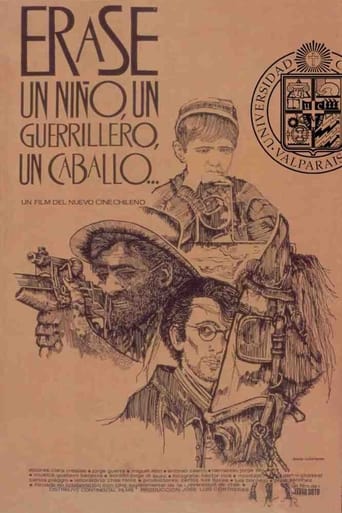
Yo tenía un camarada
A young boy follows the funeral procession for a friend through Santiago, and he notices something that stops him in his tracks: his friend's grave has no flowers. With no money to buy any, he walks the city, hoping to find a way to honor the dead. As he moves through markets, alleys, and public... Read more
Where to Watch "Yo tenía un camarada"
Not Currently Streaming
This title isn't available for streaming in the US right now.
Not Currently Available On (8 platforms)


Streaming availability last verified: January 14, 2026
About Yo tenía un camarada
A young boy follows the funeral procession for a friend through Santiago, and he notices something that stops him in his tracks: his friend's grave has no flowers. With no money to buy any, he walks the city, hoping to find a way to honor the dead. As he moves through markets, alleys, and public squares he meets people whose small kindnesses and casual indifference reveal the city's social texture. The quest to lay a simple bouquet becomes a measure of his determination and of how adults treat children and grief. The film keeps its focus tight, showing the world from a child's point of view without explaining everything.
Directed by Helvio Soto and released in 1964, the film stars Antonio Castro and Mario Lorca, and it places its action in the streets of Santiago, emphasizing everyday urban settings over studio gloss.
Reliable box office records for the film aren't available, and it appears to have had a modest, mostly local release typical of Chilean cinema of the period, rather than a wide international run.
Critical attention has been limited, reflected in sparse contemporary reviews and a modest user rating. Viewers who write about it point to themes of poverty, communal ritual, childhood agency, and social inequality, noting the film's quiet, observational approach rather than plot-driven drama.
Among historians and enthusiasts of Chilean film, Yo tenía un camarada is often cited as an example of 1960s social realist tendencies in the country's cinema, valued for its plainspoken scenes of street life and the way it centers a child's ethical impulse. It isn't widely known outside specialist circles, but it remains of interest to those tracing how Latin American filmmakers represented everyday hardship and small acts of care.
Details
- Release Date
- April 28, 1964
- User Ratings
- 1 votes
- Type
- Movie
- Genres
- Drama
Cast
Antonio Castro
Mario Lorca
Director: Helvio Soto