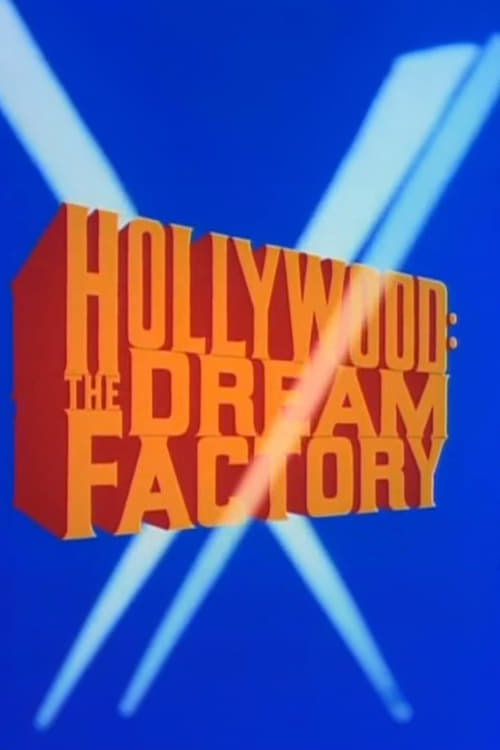
Hollywood: The Dream Factory
Hollywood: The Dream Factory traces the rise and fall of Metro-Goldwyn-Mayer by stitching together newsreels, film clips and interviews to show how a powerful studio created stars and spectacle, then lost its grip amid changing tastes and corporate pressures. The film moves from the heady... Read more
Where to Watch "Hollywood: The Dream Factory"
Not Currently Streaming
This title isn't available for streaming in the US right now.
Not Currently Available On (8 platforms)


Streaming availability last verified: January 14, 2026
About Hollywood: The Dream Factory
Hollywood: The Dream Factory traces the rise and fall of Metro-Goldwyn-Mayer by stitching together newsreels, film clips and interviews to show how a powerful studio created stars and spectacle, then lost its grip amid changing tastes and corporate pressures. The film moves from the heady confidence of MGM's 1930s and 1940s heyday into the years when back lots, props and old contracts started to be sold off, signaling an industry shift. Dick Cavett guides viewers with voiceover, while archival appearances by figures like Humphrey Bogart and Constance Bennett provide first hand texture. The documentary keeps its focus on institutions and artifacts, offering context without revealing every behind the scenes twist, and it favors footage over narration, keeping observation restrained and clear.
Released in 1972, the documentary was directed by Irwin Rosten and uses extensive archive material and interviews. Dick Cavett supplies the narration, and the film assembles appearances and clips from MGM stars to construct its historical portrait of the studio.
Box office figures for the film aren't widely reported, and it didn't register as a mainstream hit. It found most of its audience through limited theatrical runs, later television airings domestically and occasional reissues, reaching viewers interested in Hollywood history.
Though not broadly famous, the documentary helped preserve and popularize rare studio footage, reminding scholars and fans of how the studio system shaped American cinema. Its use of archival clips and voiceover narration influenced later film history programs and serves as a source for researchers piecing together MGM's institutional story.
Critical response was mixed, and viewer ratings remain modest, reflected by a 6.0/10 score from a small pool of voters. The film focuses on themes of nostalgia, industrial change, and the commodification of art, asking how commerce reshaped production, star power, and patterns of studio ownership through the twentieth century.
Details
- Release Date
- January 10, 1972
- Runtime
- 51m
- User Ratings
- 2 votes
- Type
- Movie
- Genres
- Documentary, History
- Country
- United States
- Studio
- MGM Television +1 more
- External Links
- View on IMDB
Cast

Dick Cavett
Narrator (voice)

Bud Abbott
Self (archive footage)

Constance Bennett
Self (archive footage)

Humphrey Bogart
Self (archive footage)

Lucille Bremer
Self (archive footage)

Billie Burke
Self (archive footage)

Lou Costello
Self (archive footage)

Marion Davies
Self (archive footage)

Nelson Eddy
Self (archive footage)

Betty Garrett
Self (archive footage)
Written by: Irwin Rosten