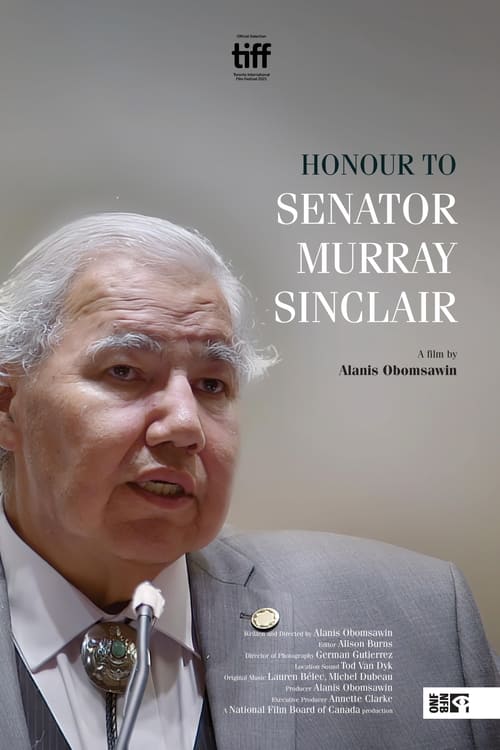
Honour to Senator Murray Sinclair
Murray Sinclair takes the stage to accept an honour that recognizes his leadership of the Truth and Reconciliation Commission of Canada. The film weaves his speech with firsthand accounts from survivors of the Indian residential school system, cutting between courtroomlike testimony and quiet... Read more
Where to Watch "Honour to Senator Murray Sinclair"
Not Currently Streaming
This title isn't available for streaming in the US right now.
Not Currently Available On (8 platforms)


Streaming availability last verified: January 14, 2026
About Honour to Senator Murray Sinclair
Murray Sinclair takes the stage to accept an honour that recognizes his leadership of the Truth and Reconciliation Commission of Canada. The film weaves his speech with firsthand accounts from survivors of the Indian residential school system, cutting between courtroomlike testimony and quiet moments of memory. Sinclair's remarks frame memories and grievances, connecting personal stories to legal and moral responsibility. Viewers are asked to listen rather than judge, as survivor voices are given space to speak about loss, resilience, and the long aftermath of institutional removal. The pacing keeps attention tight, and the editing places speech and testimony in a direct conversation that emphasizes accountability without melodrama. It doesn't explain every background detail, it trusts the material to carry weight.
Released in 2021 and directed by Alanis Obomsawin, the documentary assembles Sinclair's acceptance address with archival footage and testimonies gathered during the Truth and Reconciliation Commission. Obomsawin's work often focuses on Indigenous history, and this film continues that longrunning commitment.
As a short documentary released for festivals and broadcast, it didn't register major commercial returns, and no widely reported box office totals are available. Its reach has been more cultural and institutional than financial, typical for this kind of filmmaking.
Critical response highlights the film's restraint and moral urgency, and viewers have praised its clarity. On a popular database it holds a 9.0 out of 10 score from one vote. The documentary centers themes of testimony, responsibility, memory, and the ongoing effects of colonial policies, and calls for public reckoning.
Alanis Obomsawin's name gives the film weight within Indigenous cinema, and the pairing of Sinclair's speech with survivor testimony has reinforced conversations about residential schools in Canada. Educators, activists, and community groups have used the material to frame discussions about reconciliation and historical responsibility, extending its presence beyond film circles.
Details
- Release Date
- September 11, 2021
- Runtime
- 29m
- User Ratings
- 1 votes
- Type
- Movie
- Genres
- Documentary
- Country
- Canada
- Studio
- ONF | NFB