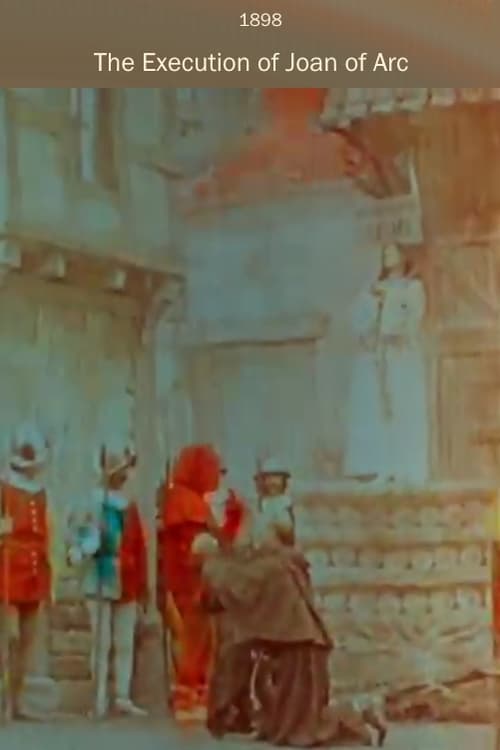
The Execution of Joan of Arc
The Execution of Joan of Arc presents a compact, stage like recreation of the famous moment in which a venerated figure meets her fate. Rather than telling a story, the film arranges performers in a carefully composed scene that resembles a public rite more than a drama. The camera stays steady... Read more
Where to Watch "The Execution of Joan of Arc"
Not Currently Streaming
This title isn't available for streaming in the US right now.
Not Currently Available On (8 platforms)


Streaming availability last verified: January 14, 2026
About The Execution of Joan of Arc
The Execution of Joan of Arc presents a compact, stage like recreation of the famous moment in which a venerated figure meets her fate. Rather than telling a story, the film arranges performers in a carefully composed scene that resembles a public rite more than a drama. The camera stays steady as actors enact the key figures and the ritual around the execution unfolds before an implied crowd. The result is a silent, visual impression rather than a narrative arc, a snapshot of history captured on film. The emphasis is on composition, gesture and the ceremonial atmosphere, inviting viewers to absorb the significance of a historical milestone through image alone. The overall effect remains a quiet ceremonial glimpse of history.
Louis Lumière directed this 1898 short, part of the Lumière brothers' early experiments with film as a document of real events. It draws on a famous historical moment rather than a fictional source, marking its place in early screen history.
Box office data for this 1898 short is not well documented, as early screenings circulated as part of multi-film programs rather than by modern grosses. The film would have been shown alongside other brief pieces, with revenue shared among exhibitors.
As an early depiction of a famous historical figure, the film helps define cinema as a place where history can be staged for the camera. Its spare approach shows how a single set and a few performers can convey a monumental moment on screen. Influence on later cinema is subtle.
Critical reception for such an early work was largely informal and technical, focusing on the novelty of moving pictures rather than narrative depth. Thematically, it underscores history as public ritual and the role of film in recording and shaping collective memory. Audiences treated it as a novelty more than drama.
Details
- Release Date
- May 20, 1898
- Runtime
- 1m
- User Ratings
- 9 votes
- Type
- Movie
- Genres
- Drama
- Country
- France
- Studio
- Lumière
- External Links
- View on IMDB